Showing posts with label online stock trading and investments. Show all posts

Wednesday, November 17, 2010

how to manage personal finances

In the digital age, nobody likes carrying a lot of cash around – I know I don’t, anyway. This can be especially frustrating when you go to keep track of your expenses, who you owe money to, who you lent some to and just where it all goes over the month.

As always, there are a lot of apps out there to help you do various things with your money. There are apps to figure out how to manage your money, oversee expenses, send money to people, keep track of who owes you, and more.

In this article, I’ll show you some of the applications you can take advantage of to do everything I’ve mentioned here, leaving you free to pick and choose the apps that will make your life easier.

id="more-58352">

How to Manage Your Money

I’m beginning to learn just how difficult managing your expenses can be. For the most part, I use my debit card tied to my checking account to make purchases. I use it at the grocery store, when I go out to lunch with my coworkers and on the weekend when I’m out exploring the city.

At the end of the month, my bank statement looks pretty ridiculous. All of these small transactions make it difficult to sift through. I still know what everything is, but if I wanted to see where I could be saving some money I wouldn’t know the first place to look.

Sounds like you? Even if it doesn’t, you could still reap the benefits of visually being able to manage your money. These apps make the process a lot easier.

Mint

style="text-align: center;">

Mint has been on our radar since back in 2007 when Karl wrote about it. Plain and simple, if there is one app I want you to keep in mind it’s this one.

Mint is a free personal finance application that can help you compare your bank accounts, credit cards, CDs, brokerage and 401(k) to the best products out there. It offers a visual representation of your finances and is very easy to set up. Use it to manage your budget, get credit card advice and understand investing.

Here’s a great video showcasing an overview of Mint’s features:

For some helpful tips on how to use Mint, check out Bakari’s article on How To Use Mint To Manage Your Budget & Spendings Online.

Thrive

Thrive (directory app) is also a great application if you’re looking for a simple way to keep track of your spending. With Thrive, you get an overall Financial Health score, which is one number that shows you how financially fit you are. It also shows you scores in other areas and offers you advice on how to make improvements.

style="text-align: center;">

Thrive breaks down your spending for you and shows you where you can save. Compare your current budget to last month’s, as well as view a six month average and target budgets to follow.

Texthog

Looking for an even simpler way to track expenses? Texthog (directory app) lets you easily store, organize and access your receipts, expense reports and more via text message, the web, your email, iPhone and even Twitter.

style="text-align: center;">

A Texthog free account gives one user the ability to track expenses, view unlimited reports and get budget/bill reminders. Take a photo of your receipts and utilize tags and categories to keep track of everything.

To check out Texthog on your iPhone, you can find the application on iTunes.

Venmo

Speaking of text messages, have you heard of Venmo? Venmo (directory app) is a nice little app that lets you pay and charge friends with your phone. Send and receive secure payments by linking your card to your account. This allows you to settle small loans you give/get by eliminating paper transactions for small amounts of money.

style="text-align: center;">

To use Venmo, all you do is create an account. You can then send and receive money to other accounts simply by using text commands in SMS. Accept a “trust” request from your friends and make transactions without having to authorize them by texting a 3 digit code.

This is a pretty solid application that I have been using a lot lately with my friends/coworkers. It’s great for when a bunch of you are out to lunch and not everyone has cash on them. “I’ll just put it on my card and Venmo you all afterwards.”

Owe Me Cash

style="text-align: center;">

Owe Me Cash is a nice app I found recently that is also very easy to use. If someone owes you money, you just sign into Owe Me Cash with your Twitter, Facebook, OpenID, or regular account and tell the app about the debt. The app will send automatic reminders to those that owe you money by phone, text and email, so you can get paid!

This app is more fun than serious, but it doubles as an easy way to keep track of who owes you what. Let the app bug your friends to pay you so you don’t have to do it yourself – it’s a win-win.

Conclusion

With these applications, your finances will never look better. Say goodbye to paper money and change.

What do you think of these money-managing applications? Will you be using any of them?

Image Credit: marema

This guest post is by Kiesha of WeBlogBetter.


Have you ever wondered how some bloggers never seem to run out of post ideas? They always manage to escape the dreaded writer’s block unscathed; they’re always full of inspiration. Ideas overflow and pour onto the page as they type feverishly. They’ve tapped into a mystical stream of never-ending stories.


What if I told you that you could tap into the same power?


Everything you’ve already learned and experienced can be used to create infinite and original ideas for your blog. If you can turn on the analytical and creative juices in your brain, you’ll never run out of ideas.


Almost anything you’ve learned in school, on the job—even life’s lessons in general—can be turned into useful analogies or comparisons. Music, television shows, movies, or videos can also be used as fuel for unique and engaging blog posts.


There are almost no limits to this technique. In fact, the more unlikely and unusual the comparisons you make, the better.


Using my personal experience to blog better


Whenever something evokes an “Aha!” moment for me, I immediately think about how I can use that principle for blogging.


For example, late one night, I was watching The Karate Kid. At the point when young Dre finally realizes that all those days and weeks spent picking up his jacket had really been preparing and strengthening him, my mind immediately connected that experience to blogging.


When Mr. Han said, “Kung Fu lives in everything we do … Everything is Kung Fu”, I jumped up like a hot coal had landed in my lap. I grabbed a pen and wrote:


“Blogging lives in everything we do … Everything is blogging! Every experience is potential blogging material!”


My husband thought I was going mad as I frantically scribbled this on an already over-filled piece of paper. It was a major “Aha!” moment!


Yes, everything in my life — even those experiences that I thought were useless wastes of time — had been preparing me for blogging.


You might not be able to see the similarities between blogging and manicuring nails, but what I learned years ago as a nail technician helps me blog better today. I was known for my creative airbrush designs and 3D nail art. I had more customers than I had time. It sounds like I should be rich by now, right?


Here’s the problem: I loved the design/art part of the process, but I hated the chemical aspects of the job. I also hate feet, which wasn’t the best of news for customers who wanted their toes to match their fingers. I suffer from the exact opposite of a “foot fetish.” Would that be a foot phobia? What I learned is that no amount of money justifies doing (or smelling) things you hate.


How does that translate to blogging?


Nothing, not even money, should be the reason for blogging about something you’re not passionate about.


I can see many parallels between applying acrylic nails and blogging.


They both require preparation


When applying acrylic nails, the surface must be adequately prepared. Skimping on this step creates the prime condition for the growth of fungus or other harmful pathogens that, if left untreated, could create medical problems for the customer.


With blogging, if you don’t take adequate time to prepare with research and fact checking, you could potentially steer a reader in the wrong direction. They may not be physically harmed, but advice you offer on your blog could harm a person’s business or their blogging efforts—and maybe even adversely impact their finances.


They Both Require Good Design


If I tried to put a beautiful design on a malformed nail, it only made the malformation more apparent. On the other hand, a well-formed nail with an ugly or bland design would be a waste of sculpting efforts. In other words, the nail had to be both well formed and display a beautiful design.


The same is true for a blog. You can have the most beautiful blog design, but if your site lacks valuable content, no one’s going to want to return. You need both good design and great content.


So you see, yes there is much to learn about blogging from doing nails. There is much to learn about blogging from everything—from all of your experiences.


Over to you


Have you ever thought about how your own abundance of personal experiences relates to your own niche? And how you can use that to create a blog unlike any other?


  1. Start by listing some of the most vivid experiences you’ve had, or lessons you’ve learned over the years.

  2. Then instead of thinking about how different they are from blogging, think about how similar they are.

  3. Use those points of intersection to highlight those similarities.

  4. Then mesh those ideas together to create something new.


What you’ll get is something totally unpredictable and extremely insightful.


Which pieces of your personal experience and life lessons could you use to create an interesting analogy or comparison in a blog post? Which could you use to help you improve your blogging in general?


Kiesha blogs at WeBlogBetter, offering blogging tips and tricks. She’s a technical writer, writing instructor, and blog consultant for small business owners. Connect with her on Twitter @weblogbetter.


alpine payment systems scam

The Inevitable Taiwanese <b>News</b> Animation about the TSA&#39;s Touching <b>...</b>

Does anyone know if this animation, or any of these CGI clips from NMA.tv, actually appeared on TV news in Taiwan? Because their website seems more like it's mostly an online thing - I would love to see video of this actually being ...

Was Tony Parker Cheating? Mystery Teammate&#39;s Wife Revealed... Erin <b>...</b>

The father of San Antonio Spurs star Brent Barry -- whose wife Erin is reportedly the other woman in a Tony Parker love triangle -- tells TMZ he's worried that Brent will be "devastated" by the news. Tony Parker Cheating With Brent ...

Google <b>News</b> experiments with metatags for publishers to give <b>...</b>

One of the biggest challenges Google News faces is one that seems navel-gazingly philosophical, but is in fact completely practical: how to determine authorship. In the glut of information on the web, much of it is, if not completely ...
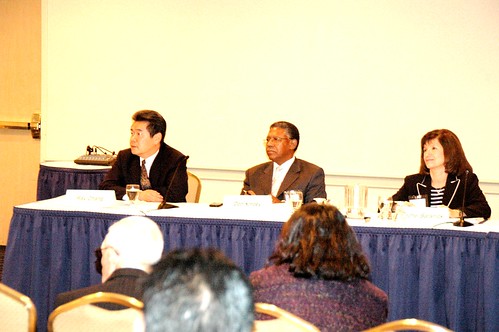


MABUHAY ALLIANCE HOST THE 6TH ANNUAL ECONOMIC DEVELOPMENT CONFERENCE by mabuhayalliance


The Inevitable Taiwanese <b>News</b> Animation about the TSA&#39;s Touching <b>...</b>

Does anyone know if this animation, or any of these CGI clips from NMA.tv, actually appeared on TV news in Taiwan? Because their website seems more like it's mostly an online thing - I would love to see video of this actually being ...

Was Tony Parker Cheating? Mystery Teammate&#39;s Wife Revealed... Erin <b>...</b>

The father of San Antonio Spurs star Brent Barry -- whose wife Erin is reportedly the other woman in a Tony Parker love triangle -- tells TMZ he's worried that Brent will be "devastated" by the news. Tony Parker Cheating With Brent ...

Google <b>News</b> experiments with metatags for publishers to give <b>...</b>

One of the biggest challenges Google News faces is one that seems navel-gazingly philosophical, but is in fact completely practical: how to determine authorship. In the glut of information on the web, much of it is, if not completely ...



alpine payment systems scam

The Inevitable Taiwanese <b>News</b> Animation about the TSA&#39;s Touching <b>...</b>

Does anyone know if this animation, or any of these CGI clips from NMA.tv, actually appeared on TV news in Taiwan? Because their website seems more like it's mostly an online thing - I would love to see video of this actually being ...

Was Tony Parker Cheating? Mystery Teammate&#39;s Wife Revealed... Erin <b>...</b>

The father of San Antonio Spurs star Brent Barry -- whose wife Erin is reportedly the other woman in a Tony Parker love triangle -- tells TMZ he's worried that Brent will be "devastated" by the news. Tony Parker Cheating With Brent ...

Google <b>News</b> experiments with metatags for publishers to give <b>...</b>

One of the biggest challenges Google News faces is one that seems navel-gazingly philosophical, but is in fact completely practical: how to determine authorship. In the glut of information on the web, much of it is, if not completely ...


Friday, September 24, 2010

personal finance programs


At a time when bailouts for America’s rich proceed unimpeded and Americans are left to fend for themselves, support for further subsidies for the rich is limited among the public. Gallup polling finds that a majority of Americans (56 percent) oppose extending the Bush-era tax cuts, which went overwhelmingly to the wealthiest of Americans. Just one in three support extending the cuts, despite the current rhetoric of the Republican Party.


Opposition to the Bush-era tax cuts is entirely rational among the public in light of the cuts’ failure to promote economic growth. The Bush tax cuts concentrated the greatest benefits toward the rich, and benefits for the affluent became even greater in their later years (during the 2008 to 2010 period specifically). They are set to expire this year, unless Democrats and Republicans in Congress renew them. Although massive amounts of cash from the cuts fell into the hands of America’s wealthiest one percent, these elites have looked at the increased volatility of today’s market and decided to hoard the cash instead of investing it. To make matters worse, extending the cuts will result in an additional transfer of $31 billion into the hands of America’s billionaires.


Labor economist Robert Reich argues that tax cuts directed at the rich do little to restore a vibrant economy. Providing an inconvenient historical analysis to the narrative forwarded by Republicans, Reich explains that from the 1951 to 1980 period, when marginal taxes were between 72 and 90 percent, average economic growth per year was at 3.7 percent. From 1983 through the recent recession – when tax cuts under Reagan and Bush were a mainstay of macro-economic policy, national yearly economic growth averaged 3 percent. Reich is not alone in his conclusion. My previous piece on the Bush tax cuts, drawing on data from the Economic Policy Institute points out that, during the period when Bush’s tax cuts were passed and when the economy began a recovery (following the dot.com crash of 2000), economic growth was generally significantly weaker than during previous economic cycles that weren’t characterized by mass tax cuts for the rich (http://www.media-ocracy.com/?p=1436). In short, there appears to be little evidence that massive subsidies to the rich are the magic formula for restoring an ailing economy. They do a lot to redistribute wealth, but little to promote short-term rapid growth, since they keep money out of the hands of those most likely to spend it right away – the working and middle class.


Tax cuts for the rich (and the cuts for business Obama is proposing) – as with cuts to the wealthy in the past – will do little-to-nothing to restore growth. The reason why is obvious enough: at a time when the masses are tapped out due to continued high levels of unemployment, massive layoffs, and high levels of personal debt, Americans have little incentive to spend without caution. Putting more money into the hands of the public (through a mass public employment program, for example, or other social welfare programs), would help in terms of stimulating spending and economic growth. What will not help are tax cuts aimed at businesses that have no incentive to increase production of goods and services because of the decreased ability of the mass public to afford such goods at a time when everyone is tightening their belts. All that tax cuts for the rich will do is further increase the already appalling depression-level inequality that exists in this country. Besides, business elites have been sitting on a mountain of cash for some time now. If they haven’t invested that money by hiring new workers, there’s little reason to expect that they will do so following another infusion of tax cuts. Corporations like the pharmaceutical giant Pfizer are sitting on more than $26 billion in cash, refusing to reinvest it in job growth. Pfizer isn’t alone either. Fortune reports that non-finance companies in the S&P 500 are holding $837 billion in cash, a growth of 26% since 2009, at a time when the economy limps along and the state mass layoffs for public workers are becoming more common. This level of cash reserves is far outside normal levels from years past, and is unconscionable at a time when these companies should be hiring new workers and focusing on expansion.


As political scientists Jacob Hacker and Paul Pierson show in their book Off Center: the Republican Revolution and the Erosion of American Democracy, the public has opposed tax cuts for the rich for at least the last ten years. Most would rather see government expand its responsibilities to assist the masses and less fortunate through the expansion of broad based social welfare programs. This lesson may stand at odds with Republican-conservative propaganda framing the public as moving to the right in the midst of a Tea Party revolution, but there is little reason to take these pronouncements seriously in light of decades of public opinion data showing longstanding public support for many individual social welfare programs (for more on this data, see the recent books by Martin Gilens, Benjamin Page, and Robert Shapiro, titled Why Americans Hate Welfare and Class War? What Americans Really Think about Economic Inequality).


Corporate America’s gravy train of bailouts and business tax cuts have enabled a culture of entitlement among America’s rich and a callousness that justifies massive layoffs, pursued alongside record executive and CEO bonuses. The pillaging of public funds for private gain is unlikely to stop in the near future in light of what appear to be imminent mass gains in Republican Congressional seats this fall.


Anthony DiMaggio is the editor of media-ocracy (www.media-ocracy.com), a daily online magazine devoted to the study of media, public opinion, and current events. He has taught U.S. and Global Politics at Illinois State University and North Central College, and is the author of When Media Goes to War (2010) and Mass Media, Mass Propaganda (2008). He can be reached at: mediaocracy@gmail.com


The State University of New York, which has 64 campuses, has agreed to a code of conduct developed by New York Attorney General Andrew Cuomo designed to safeguard students from unscrupulous marketing.


The code outlines steps schools should take to monitor and limit credit card marketing to students, according to Bloomberg News. Under the code, colleges would be required to offer financial literacy programs and not share personal information with credit card companies without permission.


Perhaps most importantly, the code bans agreements in which the school earns a percentage of finance charges imposed on students. Schools are being asked to select cards based on students' best interests if an exclusive marketing agreement is made with a credit card company, and must also monitor all credit card offers being marketed on campus.


Cuomo is investigating credit-card marketing practices that target college students through their institutions.


A 2009 survey by Sallie Mae found the average college student graduates with nearly $4,100 in credit card debt.

big white booty oxford

ICM And WME And CAA <b>News</b>… – Deadline.com

ICM's talent department signed Emmy nominee and TV standout (Malcolm In The Middle) Jane Kaczmarek, who had been represented by WME. She's managed by Adena Chawke and Lisa Wright at Greenlight Management. Also joining ICM from WME is ...

Middle East Countries Race for Nuclear Power

(Sept. 24) -- Nations in the Middle East, rich in oil, natural gas and volatile politics, are pursuing nuclear power with a headlong vigor that gives some analysts pause.

Tax The Rich! (9pm Saturday on Fox <b>News</b> Channel) « John Stossel

In my weekend special, The Battle for the Future -- it airs Saturday at 9pm and Sunday at 8 PM and.


ICM And WME And CAA <b>News</b>… – Deadline.com

ICM's talent department signed Emmy nominee and TV standout (Malcolm In The Middle) Jane Kaczmarek, who had been represented by WME. She's managed by Adena Chawke and Lisa Wright at Greenlight Management. Also joining ICM from WME is ...

Middle East Countries Race for Nuclear Power

(Sept. 24) -- Nations in the Middle East, rich in oil, natural gas and volatile politics, are pursuing nuclear power with a headlong vigor that gives some analysts pause.

Tax The Rich! (9pm Saturday on Fox <b>News</b> Channel) « John Stossel

In my weekend special, The Battle for the Future -- it airs Saturday at 9pm and Sunday at 8 PM and.


big white booty

ICM And WME And CAA <b>News</b>… – Deadline.com

ICM's talent department signed Emmy nominee and TV standout (Malcolm In The Middle) Jane Kaczmarek, who had been represented by WME. She's managed by Adena Chawke and Lisa Wright at Greenlight Management. Also joining ICM from WME is ...

Middle East Countries Race for Nuclear Power

(Sept. 24) -- Nations in the Middle East, rich in oil, natural gas and volatile politics, are pursuing nuclear power with a headlong vigor that gives some analysts pause.

Tax The Rich! (9pm Saturday on Fox <b>News</b> Channel) « John Stossel

In my weekend special, The Battle for the Future -- it airs Saturday at 9pm and Sunday at 8 PM and.


12th Annual Charity Golf Tournament benefitting the Eureka Camp Society-Apex Secondary School-presented by SNC LAVALIN Pacific Liaicon and Associates Benefitting the Eureka Camp Society-Apex Secondary School photos by Ron Sombilon Gallery (342) by Ron Sombilon Gallery


12th Annual Charity Golf Tournament benefitting the Eureka Camp Society-Apex Secondary School-presented by SNC LAVALIN Pacific Liaicon and Associates Benefitting the Eureka Camp Society-Apex Secondary School photos by Ron Sombilon Gallery (342) by Ron Sombilon Gallery


managing your personal finances


Are you a fan of the GTD personal productivity system? Well if you like "Getting Things Done," here's GFD, Getting Finances Done, which shows you how to map David Allen's same principals to managing your personal finance and achieving your financial goals.


Applying GTD principles to your personal finances - Part 1 [Getting Finances Done]


Are you a fan of the GTD personal productivity system? Well if you like "Getting Things Done," here's GFD, Getting Finances Done, which shows you how to map David Allen's same principals to managing your personal finance and achieving your financial goals.


Applying GTD principles to your personal finances - Part 1 [Getting Finances Done]


orlando big white booty

BREAKING <b>NEWS</b>: Lindsay Lohan Ordered Back To Jail; Bail Revoked <b>...</b>

9:08 am PST: The judge has thrown the book at Lindsay. Her bail was revoked. She was handcuffed and taken into custody. A probation hearing was set for October 22nd. Lindsay appeared stunned. 8:22 am PDT: Lindsay has entered the ...

FARC commander &#39;Mono Jojoy&#39; killed - Colombia <b>news</b> | Colombia Reports

One of the FARC's most senior commanders, Mono Jojoy, was killed by Colombian state forces, several media said on Thursday. The news is not yet confirmed by the authorities.

<b>News</b> - Lindsay Lohan Going Back to Jail Until Oct. 22 - Celebrity <b>...</b>

Los Angeles Superior Court Judge Elden S. Fox revokes her probation for failing at least one drug test.


BREAKING <b>NEWS</b>: Lindsay Lohan Ordered Back To Jail; Bail Revoked <b>...</b>

9:08 am PST: The judge has thrown the book at Lindsay. Her bail was revoked. She was handcuffed and taken into custody. A probation hearing was set for October 22nd. Lindsay appeared stunned. 8:22 am PDT: Lindsay has entered the ...

FARC commander &#39;Mono Jojoy&#39; killed - Colombia <b>news</b> | Colombia Reports

One of the FARC's most senior commanders, Mono Jojoy, was killed by Colombian state forces, several media said on Thursday. The news is not yet confirmed by the authorities.

<b>News</b> - Lindsay Lohan Going Back to Jail Until Oct. 22 - Celebrity <b>...</b>

Los Angeles Superior Court Judge Elden S. Fox revokes her probation for failing at least one drug test.


big white booty

BREAKING <b>NEWS</b>: Lindsay Lohan Ordered Back To Jail; Bail Revoked <b>...</b>

9:08 am PST: The judge has thrown the book at Lindsay. Her bail was revoked. She was handcuffed and taken into custody. A probation hearing was set for October 22nd. Lindsay appeared stunned. 8:22 am PDT: Lindsay has entered the ...

FARC commander &#39;Mono Jojoy&#39; killed - Colombia <b>news</b> | Colombia Reports

One of the FARC's most senior commanders, Mono Jojoy, was killed by Colombian state forces, several media said on Thursday. The news is not yet confirmed by the authorities.

<b>News</b> - Lindsay Lohan Going Back to Jail Until Oct. 22 - Celebrity <b>...</b>

Los Angeles Superior Court Judge Elden S. Fox revokes her probation for failing at least one drug test.


Dr. George P. &quot;Bud&quot; Peterson and his Talk, &quot;On Leadership&quot; by elbelbelb2000


Dr. George P. &quot;Bud&quot; Peterson and his Talk, &quot;On Leadership&quot; by elbelbelb2000


Saturday, September 18, 2010

how to manage personal finances

This post is from staff writer Sierra Black. Sierra writes about frugality, sustainable living, and getting her kids to eat kale at Childwild.com. This post is part of Book Week at Get Rich Slowly.


Since my twin victories of paying off our last credit card and funding a summer of travel, my husband has begun to show interest in personal finance.


It’s not that he wasn’t supportive of my efforts before — he just preferred to support them from a safe, ignorant distance. A distance from which I handed him an envelope of cash each week to do the grocery shopping, he didn’t ask too many questions, and somehow we were climbing out of debt. He was more than happy to adopt any frugal-living strategy I suggested, as long as he didn’t have to think about the Big Picture.


That system worked, but I longed for more active participation from him. Not only because I wanted us to share equally in the journey toward financial freedom — I do want that — but also for a selfish reason. I wanted him to participate because he’s better at this stuff than I am. He’s a whiz at spreadsheets. The man has a Ph.d in Physical Chemistry. You don’t get one of those without doing a few math problems.


Lately, I’ve been getting my wish. My husband has been talking with a financial advisor at the university he works for, and having clear, honest conversations with me about our money.


This seemed like the perfect time for me to read Mary Hunt’s How to Debt-Proof Your Marriage.


Relationship first

Hunt’s book covers the basics of personal finance and debt destruction, with a special focus on doing it as a couple. Before she even begins talking about financial management, Hunt talks about strengthening the foundations of your marriage. You can’t have financial harmony without emotional intimacy, she says.


I couldn’t agree more. It’s clear in my own marriage that spending time relaxing together on vacation helped my husband and me both chill out and have better conversations during our family finance meetings too.


Hunt and I part ways in the chapters about how to achieve that emotional intimacy, though. She bases her prescription for marital bliss on traditional gender roles. She includes chapters for each sex on how to make deposits in the other’s Love Bank — a metaphorical bank of goodwill made of small, loving gestures.


The Love Bank is an adorable idea, one I’m tempted to put into practice here in my own home. I’m pretty sure I won’t be making my deposits to my husband’s Love Bank by biting my tongue when I disagree with him, though. Likewise, I don’t expect him to express his love for me by bringing me flowers and handling all the tough decisions for me like the natural leader of our family should.


Hunt is a generation (or two) older than I am, and what works for her marriage is so foreign to my young, feminist mind that it was actually a little hard to read. But leaving aside the details of how you get to an intimate marriage, though, she and I agree wholeheartedly that it’s important to get your emotional needs met before you can effectively work together with your spouse to manage your finances.


Money second

The personal-finance half of the book will be familiar to most GRS readers. Hunt advocates an approach similar to Your Money or Your Life and Dave Ramsey’s Total Money Makeover, one that begins with calculating your net worth and tracking your expenses. From there, she covers the basics of setting up an emergency fund, creating a spending plan, and starting a debt snowball (though she uses different terms for these steps).


Like her ideal of a healthy relationship, Hunt’s financial advice seems a little dated in places. A lot of it has to do with how to organize your three-ring binders, or how to painstakingly accomplish by-hand calculations that Mint can do for you in a few minutes. If you’re a devotee of the pen-and-paper approach, though, her chapters on how to track and plan your spending are rock solid and detailed enough to easily follow.


The one thing in this book that made me want to put it down, run to my office, and implement it on the spot was, in fact, her filing system. Hunt takes a few pages to go over exactly what personal records you should be keeping, and outlines an elegant effective way to organize them. I spent an hour tearing apart my filing cabinet yesterday as soon as I read those pages. I may not want my marriage to look much like hers, but I’m delighted to have made over my filing cabinet in Mary Hunt’s image.


Different views

There are a few areas where Mary’s financial advice deviates from the usual Get Rich Slowly formula. One is the matter of the debt snowball. She encourages readers to start saving 10% of their income towards an emergency fund immediately, while still paying the minimums on their credit cards. Only after saving up a fully funded six-month emergency fund would Hunt advise you to roll those savings into your credit card payments.


Given the relative interest rates on credit cards and savings accounts, this approach will almost certainly cost you money. If it works for you psychologically, though, by all means pursue it. No matter what order you do them in, the key steps of tracking your spending, creating an emergency fund, and snowballing your debt payments will lead you to financial security.


Another place where she breaks with conventional wisdom is in her savings and spending ratios. GRS readers are familiar with the Balanced Money Formula that encourages us to use 50% of our money for living expenses, 30% for fun and 20% for savings. Hunt advises 10% for giving, 10% for saving and 80% for spending.


The order of those percentages is vital to her. A devout Christian, Hunt feels that all the money that comes into your life is a blessing from God, and promptly giving 10% of it back to God shows you can be trusted with this blessing, and more of it will come your way.


I’m not a Christian, but I admire Mary’s faith and devotion to charitable giving. It’s a goal of mine to give 10% of my income. I’ve written about that here before, and readers made a persuasive case for waiting until my debts were paid before giving so much away. For now, I give a modest amount and look forward to giving more in the future.


I think that for Hunt, the psychological benefits of giving 10% and saving 10% before you make any spending decisions at all outweigh the financial benefits of paying off your debts as fast as possible and then beginning to accumulate and donate wealth.


It’s an interesting approach, and one that might work for a lot of people. Particularly if you’re a devoted Christian and looking for a personal-finance book that reflects your values, you’ll find a lot of good in How to Debt-Proof Your Marriage. If you’re looking for a book that’s totally focused on financial savvy and relationship skills, though, this might not be your best bet.


From Hotline (HT: Mataconis):


O'Donnell, a perennial conservative candidate in Delaware, is challenging moderate Rep. Mike Castle (R), the clear favorite of the GOP establishment. But she has come under fire recently for her personal financial problems. Reports have surfaced that she owed $10K in back taxes, defaulted on her mortgage and holds outstanding campaign debt.


Levi Russell, a spokesman for the group, told Hotline On Call that the group was not aware of O'Donnell's personal financial problems before it endorsed her.


"We don't know the exact situation," he said.


When asked if the group discussed the issues with O'Donnell, Russell responded: "No we haven't. We don't really have any contact with the campaign or the candidate."


We have blogged before reasons why we support Mike Castle over O'Donnell. But this report raises even more questions, such as:


  1. If the Tea Party really stands for fiscal conservatism, why would they endorse somebody who can't even manage her personal finances?

  2. Does it give you confidence in the Tea Party that they go around endorsing people without having any contact with the candidate? How do they know that this female version of Harold Stassen is really worthy of such an endorsement?

  3. Christine O'Donnell has run for office 4 times. Her sole victory was an uncontested Republican primary.

  4. In 2008, O'Donnell lost the Delaware senate race to Joe Biden by 65-35. She later falsely claimed to have won two counties in that race. Biden's percentage of the vote in 2008 was the largest of any of his senatorial campaigns.

  5. In 2008, one of the great Democratic landslides, Mike Castle beat his Democratic challenger for Delaware's sole Congressional seat by 23 points. Castle has won 13 consecutive state-wide races as a candidate either for Governor or Congressman. He's way ahead of the Democrat in the polls while O'Donnell trails the Democrat by 10 points.


As a student of Delaware corporate governance, I am firmly convinced that Delaware needs quality representation in Congress if it is to fend off the creeping federalization of corporate law. As a big tent Republican, I'm inclined to support smart, electable, centrists like Mike Castle over someone like O'Donnell. The perfect must not be allowed to become the enemy of the good. Especially when the supposed perfect candidate is pretty seriously flawed and probably unelectable.


eric seiger do how to lose weight fast penis extender

Would You Pay for Online <b>News</b> Content? « Internet Nut

It cannot be denied that newspaper circulation and the rate of real media advertising is on the decline. As more and more people turn to modern technology and.

Last Look: Style <b>News</b> You Might Have Missed (PHOTOS, POLL)

Welcome to the Last Look, where we round up the Style scraps that didn't make it to our news page this week. Click through and catch up on what else happened since Monday!

openSUSE <b>News</b> » openSUSE Weekly <b>News</b>, Issue 141 is out!

openSUSE for your ears. The openSUSE Weekly News are available as Livestream or Podcast in the German Language. You can hear it or download it on http://blog.radiotux.de/podcast. ...


MABUHAY ALLIANCE HOST THE 6TH ANNUAL ECONOMIC DEVELOPMENT CONFERENCE by mabuhayalliance


Tuesday, September 14, 2010

personal finance budgets


Behold: the most profoundly pessimistic attack ad of 2010. Meg Whitman has delivered unto us a masterpiece of dirty politics.


What is most striking about this already-infamous ad isn't the boldness of its mendacity--though it certainly has that--but the cynicism of its timing. It's the sort of unabashedly nasty hit that one would expect just days before an election, and even then only from an outside interest group. Yet here it is, delivered to us in early September with Meg Whitman's name right there on the card. By not only producing so brazen a piece of misinformation but also airing it with more than enough time to effectively rebut, Whitman is betting the house on the politics of personal animosity.


If you live in California or happen to be a political junkie, you've no doubt seen it already and can skip the next paragraph. But for those of you who have avoided it (probably due to a weak stomach or some lingering, endangered shred of personal or political optimism) here's a recap:


Bill Clinton, in a 1992 debate, sits face-to-face with Jerry Brown. Brown looks at Clinton like a kid called to the principal's office. Clinton blasts Brown as a tax-raising liar: "CNN, not me, CNN says his assertion about his tax record was, quote, 'just plain wrong.' He raised taxes as Governor of California. He doesn't tell the people the truth." That's two levels of surrogate Whitman is hiding behind, for those of you keeping track. On its own, the ad is devastating.


There's just one little problem: That CNN report turned out to be "just plain wrong," and Whitman's campaign--like all interested parties--has been fully aware of that for some time. From what the San Jose Mercury-News has been able to piece together, the CNN report used the wrong years both in determining the base of comparison and in identifying the budgets Brown had control over. This made it seem Brown was responsible for a sizable tax increase during Reagan's last year in office and failed to give him credit for tax cuts later in his tenure. The LA Times and California Department of Finance also revisited the numbers and found them to be outright wrong, for the same reasons, in the same ways. Brown was telling the truth. He had cut taxes as Governor of California.


Whitman knew full well that the story was a lie, but she wanted to repeat it all the same. The excuse her communications director offered the Mercury-News: "Bill Clinton, not me, said Jerry Brown 'doesn't tell people the truth.'" Sound familiar?


But this ad is so much more perverse than any simple repetition of untruths. It practically baits a popular former president into entering the fray on the side of Whitman's opponent, yet rests comfortably on the belief that personal grievances and misgivings will trump ethics and ideology to prevent any serious intervention by Clinton or one of the nation's most popular fact checkers.


Yes, in case you missed it, there is yet another personality being ironically misused by this ad. Brooks Jackson, the reporter responsible for this particular "oopsie," now heads FactCheck.org. If you didn't already know that, give yourself a moment to let it sink in: The man whose erroneous report is still fueling factually-incorrect campaign advertisements nearly two decades later is also the guy we all run to when we question the veracity of claims in a political advertisement.


For his part, Jackson acknowledged the error on FactCheck.org in a manner only slightly more embarrassing than admirable. Unlike other political ads targeted by FactCheck, the correction has yet to warrant an actual article on the site. Jackson did, however, post a blog entry on the topic on one of the site's secondary pages. It fails to even mention the Clinton ad and generally reads more like a lengthy rationalization than a correction. He even works in the astonishing insinuation that Prop 13 was a reaction to Brown's high taxes. (Prop 13, patently a reaction to soaring property values and their impact on property tax rates, was not included in the figures used to correct Jackson's report.) After muddying the waters for seven paragraphs, he concludes that state taxes "increased during four of Brown's eight years, and during six of those years they were higher than before he took office. But they were lower during his final two years."


The Mercury-News, State Department of Finance and Associated Press see things a little differently. By about $16 billion in tax cuts during Brown's first seven years in office, and $4 billion in savings per year between 1978 and 1982. Not counting the savings from Prop 13. So much for a gentleman admitting he was wrong.


Not that Jackson matters much to Brown's campaign. Both Brown and Whitman know that only one man can make this ad backfire on Whitman: former president Clinton. Whitman is betting (perhaps unwisely, given Clinton's general election campaigning for Barack Obama,) that 18 years after their bitter battle for the Democratic nomination, Clinton still hates Brown so much that he will refuse defend him with any real conviction.


Exactly how acrimonious was the Clinton-Brown contest? The clip in Whitman's ad might be called one of its more friendly exchanges.


In what was widely taken as an allusion to Brown's onslaught of attacks on Clinton's character, Jesse Jackson opened one debate by chastising the candidates for getting too caught up in "attacks and counterattacks." It didn't slow Brown down. Later that evening, he accused Clinton of racial insensitivity for playing golf at a whites-only country club and using black prisoners as campaign props.


At the final debate, when Brown (not without his own, similar conflicts of interest,) accused Clinton of "funneling money to his wife's law firm," Clinton shot back, "You're not worth being on the same platform as my wife."


The highlight (or low point) of that debate was when Clinton said, "I feel sorry for Jerry Brown... He asked me to support him for President once." When a moderator asked if he did, Clinton didn't miss a beat before shooting back, "Of course not." Footage circulated from the night appears to show gathered reporters roaring with laughter. Whitman probably has that ad already in the can.


In an email blast from Brown's campaign the morning the ad came out, Brown was quick to let Clinton off the hook. The former president had "later learned" that the numbers were incorrect, according to the letter to supporters. But it's a lot easier for Jerry Brown to play nice for the sake of his own campaign than it will be for Bill Clinton, who doesn't need any favors, to come riding to Brown's rescue.


Is Clinton still unable to put the past behind him?


Pundits have pointed to his early support for Gavin Newsom over Brown as proof that he still holds a grudge. But was Clinton's support of Newsom the result of his decades-old feud with Brown, or of a more recently developed loyalty? Newsom was a very vocal, enthusiastic supporter of Hillary Clinton during the 2008 primaries.


Ironically, that support might have been born out of the former San Francisco Mayor's own feud with another Democratic president. In 2007, Newsom implied to Reuters that Obama, "As God is my witness, will not be photographed with me, will not be in the same room with me." At issue was Newsom's having granted marriage licenses to same-sex couples.


The Obama-Newsom feud was verified in early 2008, when Willie Brown (backed by several Newsom staffers) gave a much more detailed account of the disputed incident to the San Francisco Chronicle. Obama's campaign denied the accusation, telling Politico that the incoming president was so "pissed" over the stories that the new administration "may give San Francisco to Canada."


Newsom might well have supported Hillary Clinton just as enthusiastically regardless of his personal feelings about Obama. Still, it's tempting to imagine that his feud with the current president might have, just as much as Bill Clinton's animosity toward Jerry Brown, circuitously earned him the former president's support. In politics, there is seldom a single reason for anything, and with so many personal feuds and vendettas driving the nation's politics, it's more than a little difficult to keep straight which one is motivating whom and when.


Will Clinton step in? If he wants to keep that "team player" image he so carefully rebuilt during the 2008 general election, he'll have to. But will he do so looking like an angry, misused Brown supporter or a fellow Democrat forced by party allegiance to go through the motions? I don't know.


What I can say with certainty is that Meg Whitman doesn't even take seriously the possibility that Bill Clinton would rather campaign for Jerry Brown than be seen as the man responsible for costing Democrats the California governor's mansion.


Update: Around the time that this posted, stories about Brown's remarks about Clinton at a campaign event Sunday were beginning to spread. So it seems that Whitman was probably right. "No matter how cynical you become, it's never enough to keep up." - Lily Tomlin.


Behold: the most profoundly pessimistic attack ad of 2010. Meg Whitman has delivered unto us a masterpiece of dirty politics.


What is most striking about this already-infamous ad isn't the boldness of its mendacity--though it certainly has that--but the cynicism of its timing. It's the sort of unabashedly nasty hit that one would expect just days before an election, and even then only from an outside interest group. Yet here it is, delivered to us in early September with Meg Whitman's name right there on the card. By not only producing so brazen a piece of misinformation but also airing it with more than enough time to effectively rebut, Whitman is betting the house on the politics of personal animosity.


If you live in California or happen to be a political junkie, you've no doubt seen it already and can skip the next paragraph. But for those of you who have avoided it (probably due to a weak stomach or some lingering, endangered shred of personal or political optimism) here's a recap:


Bill Clinton, in a 1992 debate, sits face-to-face with Jerry Brown. Brown looks at Clinton like a kid called to the principal's office. Clinton blasts Brown as a tax-raising liar: "CNN, not me, CNN says his assertion about his tax record was, quote, 'just plain wrong.' He raised taxes as Governor of California. He doesn't tell the people the truth." That's two levels of surrogate Whitman is hiding behind, for those of you keeping track. On its own, the ad is devastating.


There's just one little problem: That CNN report turned out to be "just plain wrong," and Whitman's campaign--like all interested parties--has been fully aware of that for some time. From what the San Jose Mercury-News has been able to piece together, the CNN report used the wrong years both in determining the base of comparison and in identifying the budgets Brown had control over. This made it seem Brown was responsible for a sizable tax increase during Reagan's last year in office and failed to give him credit for tax cuts later in his tenure. The LA Times and California Department of Finance also revisited the numbers and found them to be outright wrong, for the same reasons, in the same ways. Brown was telling the truth. He had cut taxes as Governor of California.


Whitman knew full well that the story was a lie, but she wanted to repeat it all the same. The excuse her communications director offered the Mercury-News: "Bill Clinton, not me, said Jerry Brown 'doesn't tell people the truth.'" Sound familiar?


But this ad is so much more perverse than any simple repetition of untruths. It practically baits a popular former president into entering the fray on the side of Whitman's opponent, yet rests comfortably on the belief that personal grievances and misgivings will trump ethics and ideology to prevent any serious intervention by Clinton or one of the nation's most popular fact checkers.


Yes, in case you missed it, there is yet another personality being ironically misused by this ad. Brooks Jackson, the reporter responsible for this particular "oopsie," now heads FactCheck.org. If you didn't already know that, give yourself a moment to let it sink in: The man whose erroneous report is still fueling factually-incorrect campaign advertisements nearly two decades later is also the guy we all run to when we question the veracity of claims in a political advertisement.


For his part, Jackson acknowledged the error on FactCheck.org in a manner only slightly more embarrassing than admirable. Unlike other political ads targeted by FactCheck, the correction has yet to warrant an actual article on the site. Jackson did, however, post a blog entry on the topic on one of the site's secondary pages. It fails to even mention the Clinton ad and generally reads more like a lengthy rationalization than a correction. He even works in the astonishing insinuation that Prop 13 was a reaction to Brown's high taxes. (Prop 13, patently a reaction to soaring property values and their impact on property tax rates, was not included in the figures used to correct Jackson's report.) After muddying the waters for seven paragraphs, he concludes that state taxes "increased during four of Brown's eight years, and during six of those years they were higher than before he took office. But they were lower during his final two years."


The Mercury-News, State Department of Finance and Associated Press see things a little differently. By about $16 billion in tax cuts during Brown's first seven years in office, and $4 billion in savings per year between 1978 and 1982. Not counting the savings from Prop 13. So much for a gentleman admitting he was wrong.


Not that Jackson matters much to Brown's campaign. Both Brown and Whitman know that only one man can make this ad backfire on Whitman: former president Clinton. Whitman is betting (perhaps unwisely, given Clinton's general election campaigning for Barack Obama,) that 18 years after their bitter battle for the Democratic nomination, Clinton still hates Brown so much that he will refuse defend him with any real conviction.


Exactly how acrimonious was the Clinton-Brown contest? The clip in Whitman's ad might be called one of its more friendly exchanges.


In what was widely taken as an allusion to Brown's onslaught of attacks on Clinton's character, Jesse Jackson opened one debate by chastising the candidates for getting too caught up in "attacks and counterattacks." It didn't slow Brown down. Later that evening, he accused Clinton of racial insensitivity for playing golf at a whites-only country club and using black prisoners as campaign props.


At the final debate, when Brown (not without his own, similar conflicts of interest,) accused Clinton of "funneling money to his wife's law firm," Clinton shot back, "You're not worth being on the same platform as my wife."


The highlight (or low point) of that debate was when Clinton said, "I feel sorry for Jerry Brown... He asked me to support him for President once." When a moderator asked if he did, Clinton didn't miss a beat before shooting back, "Of course not." Footage circulated from the night appears to show gathered reporters roaring with laughter. Whitman probably has that ad already in the can.


In an email blast from Brown's campaign the morning the ad came out, Brown was quick to let Clinton off the hook. The former president had "later learned" that the numbers were incorrect, according to the letter to supporters. But it's a lot easier for Jerry Brown to play nice for the sake of his own campaign than it will be for Bill Clinton, who doesn't need any favors, to come riding to Brown's rescue.


Is Clinton still unable to put the past behind him?


Pundits have pointed to his early support for Gavin Newsom over Brown as proof that he still holds a grudge. But was Clinton's support of Newsom the result of his decades-old feud with Brown, or of a more recently developed loyalty? Newsom was a very vocal, enthusiastic supporter of Hillary Clinton during the 2008 primaries.


Ironically, that support might have been born out of the former San Francisco Mayor's own feud with another Democratic president. In 2007, Newsom implied to Reuters that Obama, "As God is my witness, will not be photographed with me, will not be in the same room with me." At issue was Newsom's having granted marriage licenses to same-sex couples.


The Obama-Newsom feud was verified in early 2008, when Willie Brown (backed by several Newsom staffers) gave a much more detailed account of the disputed incident to the San Francisco Chronicle. Obama's campaign denied the accusation, telling Politico that the incoming president was so "pissed" over the stories that the new administration "may give San Francisco to Canada."


Newsom might well have supported Hillary Clinton just as enthusiastically regardless of his personal feelings about Obama. Still, it's tempting to imagine that his feud with the current president might have, just as much as Bill Clinton's animosity toward Jerry Brown, circuitously earned him the former president's support. In politics, there is seldom a single reason for anything, and with so many personal feuds and vendettas driving the nation's politics, it's more than a little difficult to keep straight which one is motivating whom and when.


Will Clinton step in? If he wants to keep that "team player" image he so carefully rebuilt during the 2008 general election, he'll have to. But will he do so looking like an angry, misused Brown supporter or a fellow Democrat forced by party allegiance to go through the motions? I don't know.


What I can say with certainty is that Meg Whitman doesn't even take seriously the possibility that Bill Clinton would rather campaign for Jerry Brown than be seen as the man responsible for costing Democrats the California governor's mansion.


Update: Around the time that this posted, stories about Brown's remarks about Clinton at a campaign event Sunday were beginning to spread. So it seems that Whitman was probably right. "No matter how cynical you become, it's never enough to keep up." - Lily Tomlin.


penis extender

Small Business <b>News</b>: Facebook Phenomenon

The Facebook phenomenon may be the most important to small businesses on the Web currently, even if other tools like Twitter are sometimes more talked about.

CBS <b>News</b> launches dedicated iPad app

iPad owners looking for CBS News content now have a free app for that. CBS is following the lead of ABC News with an app that caters to the dimensions of the iPad. The CBS News app features an easy to use interface that includes stories ...

New Children&#39;s Book Coming from President Obama - Political Punch

As part of the book deal then-Sen. Barack Obama, D-Ill., inked in 2004, Random House today announced the publication of a children's book by the president, “Of Thee I Sing: A Letter to My Daughters.” Political Punch Blog.


Free Personal Finance Software, Budget Software, Online Money Management and Budget Planner  Mint.com by WEB Design archives


internet marketing course

Small Business <b>News</b>: Facebook Phenomenon

The Facebook phenomenon may be the most important to small businesses on the Web currently, even if other tools like Twitter are sometimes more talked about.

CBS <b>News</b> launches dedicated iPad app

iPad owners looking for CBS News content now have a free app for that. CBS is following the lead of ABC News with an app that caters to the dimensions of the iPad. The CBS News app features an easy to use interface that includes stories ...

New Children&#39;s Book Coming from President Obama - Political Punch

As part of the book deal then-Sen. Barack Obama, D-Ill., inked in 2004, Random House today announced the publication of a children's book by the president, “Of Thee I Sing: A Letter to My Daughters.” Political Punch Blog.


big white booty

Free Personal Finance Software, Budget Software, Online Money Management and Budget Planner  Mint.com by WEB Design archives


personal finance money management


As investors search for yield anywhere and everywhere, bonds are trading in uncharted territory. Please consider Obama Wins Low Yield as Markets Shrink Aiding Deficit

Bond investors seeking top-rated securities face fewer alternatives to Treasuries, allowing President Barack Obama to sell unprecedented sums of debt at ever lower rates to finance a $1.47 trillion deficit.

Shrinking credit markets help explain why some Treasury yields are at record lows even after the amount of marketable government debt outstanding increased by 21 percent from a year earlier to $8.18 trillion. Last week, the U.S. government auctioned $34 billion of three-year notes at a yield of 0.844 percent, the lowest ever for that maturity.

Spending by companies and consumers has slowed as the economy has shown signs of weakening. Companies in the Standard & Poor’s 500 Index have stockpiled a record $2.3 trillion of cash and equivalents. Company borrowing slid 29 percent in the first half of the year to $528 billion amid a dearth of business investment, Bloomberg data shows.
Piles of Cash Equates to Piles of Debt

Companies are piling up cash alright. However, the flip side of that cash is debt.

Moreover, analysts mistake that cash for willingness to expand. The reality is corporations do not want to get trapped like they did in 2008, unable to borrow.

For more on corporate cash levels, please see Are Corporations Sitting on Piles of Cash?
Individuals are also hoarding cash. The U.S. savings rate reached 6.4 percent in June, up from 1.7 percent in August 2007, the start of the financial crisis.
Are Individuals Hoarding Cash?

Individuals are not really "hoarding cash" either. Instead they are paying down debt. Most do not realize that by definition, paying down debt constitutes "saving".

For most wage earners, the savings rate is after-tax salary minus personal consumption expenditures (PCE). For a more precise definition, please see What's Behind The Soaring Savings Rate?
“There’s been a collapse in both consumer and business credit demand,” said James Kochan, the chief fixed-income strategist at Menomonee Falls, Wisconsin-based Wells Fargo Fund Management, which oversees $179 billion. “To see both categories so weak for such an extended period of time, you’d probably have to go back to the Depression.”
Food Stamps and Unemployment Insurance Mask Depression

I believe we are in a depression now. The key difference is food stamps and unemployment checks have replaced bread lines.

We also have hundreds of thousands of people living in their homes without making payments on their mortgage or home equity lines. The slow foreclosure process encourages more to do the same.
“The diminishing supply” of alternatives to Treasuries “is giving Washington an opportunity to continue with its fiscal irresponsibilities,” said Mark MacQueen, partner and portfolio manager at Austin, Texas-based Sage Advisory Services, which oversees $8.5 billion. “The only way to tell Washington and America ‘no more’ is a weak dollar, which eventually leads to higher interest rates.”

“We are slowly playing a fool’s game as rates go further down to unsustainably low levels,” said Dan Shackelford, a money manager who helps oversee $15 billion in fixed-income assets at T. Rowe Price Group Inc. in Baltimore.
Thoughts on the Fool's Game

If you are managing $15 billion thinking it is a "fool's game", then in my opinion you ought not be doing it. It seems to me there is a lack of fiduciary responsibility if one is investing client money in a "fool's game".

What the hell - Anything for a fee!

I do think corporate bonds, especially most junk is playing for the greater fool. In regards to treasuries, there is going to be an exit problem for sure, but that could be years away. In Japan, yields stayed low for a decade. Why can't it happen here?

Yields certainly might stay low for an extended period. Whether or not they do remains to be seen. I happen to like long-term treasuries right now, but certainly not as much as when the 10-year was at 3.75% and bears were foolishly shorting treasuries like mad.
The government isn’t the only one getting a good deal. Armonk, New York-based International Business Machines Corp., the world’s biggest computer services provider, sold $1.5 billion of three-year notes on Aug. 2 with a coupon of 1 percent, the lowest of the more than 3,400 securities in the Barclays Capital U.S. Corporate Index of investment-grade company debt.

Portland, Oregon, sold about $408 million in sewer-system revenue debt on Aug. 11, with utility bond yields at the lowest level on record. Yields on 10-year, AA rated tax-exempts backed by utility revenue stood at 3.02 percent on Aug. 10, according to Bloomberg Fair Market Value data. That’s the lowest since the index was created in November 1993.

“We are in unchartered territory,” said [William Larkin, a fixed-income money manager in Salem, Massachusetts at Cabot Money Management]. “We are pushing and pulling levers that we don’t understand the full implications.”
Uncharted Territory

This is indeed uncharted territory thanks to the Fed pushing and pulling levers in a manner it does not understand. William Black, a former bank regulator, is one person who does understand. Black says U.S. Using "Rally Stupid Strategy" to Hide Bank Losses - Will Produce Japanese Style Lost Decade.

I agree with his assessment.

Mike "Mish" Shedlock
http://globaleconomicanalysis.blogspot.com
Click Here To Scroll Thru My Recent Post List


If you are having a tough time understanding the nitty gritty of your mortgage, like the total interest you’ll end up paying and the monthly payments you’ll need to make, then you might as well use this simple web based tool called the AmortizationLoanCalculator.

It asks you for the principal loan amount, the loan term and the annual interest rate and returns a table that’s an amortization schedule showing your periodic payments, what part of it is going towards paying the principal and the interest, and the overall interest you pay in the lifetime of the mortgage.

As you can see in the above screenshot, the table is pretty easy understand. The C Prin and C Int stand for cumulative principal and cumulative interest respectively.

Features

  • Online calculator for calculating loan payments and interest.
  • Simple interface; no sign up required.
  • Enter the principal amount, loan term and annual interest rate.
  • Amortization schedule with cumulative rates and amounts displayed.

Check out AmortizationLoanCalculator @ amortizationloancalculator.net/index.php (By Abhijeet from Guiding Tech)


penis extender

When is it time to switch your banking service by financemetrics


As investors search for yield anywhere and everywhere, bonds are trading in uncharted territory. Please consider Obama Wins Low Yield as Markets Shrink Aiding Deficit

Bond investors seeking top-rated securities face fewer alternatives to Treasuries, allowing President Barack Obama to sell unprecedented sums of debt at ever lower rates to finance a $1.47 trillion deficit.

Shrinking credit markets help explain why some Treasury yields are at record lows even after the amount of marketable government debt outstanding increased by 21 percent from a year earlier to $8.18 trillion. Last week, the U.S. government auctioned $34 billion of three-year notes at a yield of 0.844 percent, the lowest ever for that maturity.

Spending by companies and consumers has slowed as the economy has shown signs of weakening. Companies in the Standard & Poor’s 500 Index have stockpiled a record $2.3 trillion of cash and equivalents. Company borrowing slid 29 percent in the first half of the year to $528 billion amid a dearth of business investment, Bloomberg data shows.
Piles of Cash Equates to Piles of Debt

Companies are piling up cash alright. However, the flip side of that cash is debt.

Moreover, analysts mistake that cash for willingness to expand. The reality is corporations do not want to get trapped like they did in 2008, unable to borrow.

For more on corporate cash levels, please see Are Corporations Sitting on Piles of Cash?
Individuals are also hoarding cash. The U.S. savings rate reached 6.4 percent in June, up from 1.7 percent in August 2007, the start of the financial crisis.
Are Individuals Hoarding Cash?

Individuals are not really "hoarding cash" either. Instead they are paying down debt. Most do not realize that by definition, paying down debt constitutes "saving".

For most wage earners, the savings rate is after-tax salary minus personal consumption expenditures (PCE). For a more precise definition, please see What's Behind The Soaring Savings Rate?
“There’s been a collapse in both consumer and business credit demand,” said James Kochan, the chief fixed-income strategist at Menomonee Falls, Wisconsin-based Wells Fargo Fund Management, which oversees $179 billion. “To see both categories so weak for such an extended period of time, you’d probably have to go back to the Depression.”
Food Stamps and Unemployment Insurance Mask Depression

I believe we are in a depression now. The key difference is food stamps and unemployment checks have replaced bread lines.

We also have hundreds of thousands of people living in their homes without making payments on their mortgage or home equity lines. The slow foreclosure process encourages more to do the same.
“The diminishing supply” of alternatives to Treasuries “is giving Washington an opportunity to continue with its fiscal irresponsibilities,” said Mark MacQueen, partner and portfolio manager at Austin, Texas-based Sage Advisory Services, which oversees $8.5 billion. “The only way to tell Washington and America ‘no more’ is a weak dollar, which eventually leads to higher interest rates.”

“We are slowly playing a fool’s game as rates go further down to unsustainably low levels,” said Dan Shackelford, a money manager who helps oversee $15 billion in fixed-income assets at T. Rowe Price Group Inc. in Baltimore.
Thoughts on the Fool's Game

If you are managing $15 billion thinking it is a "fool's game", then in my opinion you ought not be doing it. It seems to me there is a lack of fiduciary responsibility if one is investing client money in a "fool's game".

What the hell - Anything for a fee!

I do think corporate bonds, especially most junk is playing for the greater fool. In regards to treasuries, there is going to be an exit problem for sure, but that could be years away. In Japan, yields stayed low for a decade. Why can't it happen here?

Yields certainly might stay low for an extended period. Whether or not they do remains to be seen. I happen to like long-term treasuries right now, but certainly not as much as when the 10-year was at 3.75% and bears were foolishly shorting treasuries like mad.
The government isn’t the only one getting a good deal. Armonk, New York-based International Business Machines Corp., the world’s biggest computer services provider, sold $1.5 billion of three-year notes on Aug. 2 with a coupon of 1 percent, the lowest of the more than 3,400 securities in the Barclays Capital U.S. Corporate Index of investment-grade company debt.

Portland, Oregon, sold about $408 million in sewer-system revenue debt on Aug. 11, with utility bond yields at the lowest level on record. Yields on 10-year, AA rated tax-exempts backed by utility revenue stood at 3.02 percent on Aug. 10, according to Bloomberg Fair Market Value data. That’s the lowest since the index was created in November 1993.

“We are in unchartered territory,” said [William Larkin, a fixed-income money manager in Salem, Massachusetts at Cabot Money Management]. “We are pushing and pulling levers that we don’t understand the full implications.”
Uncharted Territory

This is indeed uncharted territory thanks to the Fed pushing and pulling levers in a manner it does not understand. William Black, a former bank regulator, is one person who does understand. Black says U.S. Using "Rally Stupid Strategy" to Hide Bank Losses - Will Produce Japanese Style Lost Decade.

I agree with his assessment.

Mike "Mish" Shedlock
http://globaleconomicanalysis.blogspot.com
Click Here To Scroll Thru My Recent Post List


If you are having a tough time understanding the nitty gritty of your mortgage, like the total interest you’ll end up paying and the monthly payments you’ll need to make, then you might as well use this simple web based tool called the AmortizationLoanCalculator.

It asks you for the principal loan amount, the loan term and the annual interest rate and returns a table that’s an amortization schedule showing your periodic payments, what part of it is going towards paying the principal and the interest, and the overall interest you pay in the lifetime of the mortgage.

As you can see in the above screenshot, the table is pretty easy understand. The C Prin and C Int stand for cumulative principal and cumulative interest respectively.

Features

  • Online calculator for calculating loan payments and interest.
  • Simple interface; no sign up required.
  • Enter the principal amount, loan term and annual interest rate.
  • Amortization schedule with cumulative rates and amounts displayed.

Check out AmortizationLoanCalculator @ amortizationloancalculator.net/index.php (By Abhijeet from Guiding Tech)


online stock trading online stock trading how to lose weight fast

CBS <b>News</b> launches iPad app | iLounge <b>News</b>

iLounge news discussing the CBS News launches iPad app. Find more iPad news from leading independent iPod, iPhone, and iPad site.

Pew Research: More People Got Their <b>News</b> Online Yesterday Than <b>...</b>

The Pew Research Center, which regularly surveys US consumers about their media consumption habits, put out a report which shows that more people are getting their news online than from print newspapers. In response to a survey question ...

Fox <b>News</b> Audience Grows Among Republicans And Independents; CNN <b>...</b>

Pew is out with their annual look at how news consumers get their information, with several interesting breakdowns across various forms of media. But one category that sticks out is which cable news network plays a significant role in ...


When is it time to switch your banking service by financemetrics


big white booty